


Back Pain Treatment Options: Chiropractic, Injections or Surgery?
Back pain is one of the most common health complaints in Australia. Nearly everyone experiences it at some point, and for many people it becomes a recurring problem that affects work, exercise, sleep, and quality of life.
When back pain strikes, many people wonder:
- Should I take medication?
- Do I need physiotherapy?
- Would a cortisone injection help?
- Is surgery my only option?
- Could chiropractic care help?
-
The good news is that the vast majority of low back pain cases improve without surgery. In fact, most modern clinical guidelines recommend conservative, non-drug treatment as the first line of care before considering injections or surgery. Research-based guidelines from the American College of Physicians recommend spinal manipulation, exercise, and other non-drug therapies before medications are considered.
This article explores the most common treatment options, what the research says, and when each approach may be appropriate.

The Back Pain Treatment Pyramid
Think of back pain treatment as a pyramid.
First-Line Care (Conservative Treatment)
- Education
- Activity modification
- Chiropractic care
- Exercise rehabilitation
- Physiotherapy
- Lifestyle modification
Hayden et al. (2021)Exercise Therapy for Chronic Low Back Pain
Key finding:
Exercise is effective for chronic low back pain and should be part of most conservative treatment plans.


Second-Line Care
- Anti-inflammatory medication
- Muscle relaxants
- Prescription pain medication
- American College of Physicians Guideline (2017) research Key finding:Recommends non-drug treatments such as spinal manipulation before medication for most cases of acute and chronic low back pain.
- https://www.acponline.org/acp-newsroom/american-college-of-physicians-issues-guideline-for-treating-nonradicular-low-back-pain?utm_source=chatgpt.com
Third-Line Care
- Cortisone injections
- Nerve blocks
- Radiofrequency ablation
Final Option
- Surgery
Most patients should move through the pyramid from the bottom upward rather than jumping straight to invasive procedures.
Why Conservative Care Should Usually Come First
Research consistently shows that most episodes of back pain are not caused by serious disease and do not require surgery.
Conservative care aims to:
- Improve movement
- Reduce mechanical stress
- Restore function
- Improve strength and stability
- Help patients remain active
Unlike medications or injections, conservative care attempts to address the underlying functional problems contributing to pain rather than simply masking symptoms.
Clinical practice guidelines from multiple countries now recommend non-drug treatments before medication whenever possible.
Current evidence suggests that most patients with low back pain should begin with conservative care. Clinical guidelines consistently recommend non-drug approaches before medication, injections, or surgery. Among conservative options, spinal manipulation, exercise therapy, and patient education have the strongest support. The best outcomes are often achieved when chiropractic care is combined with targeted rehabilitation and lifestyle modification.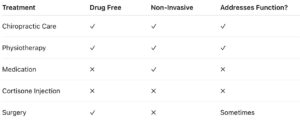
Chiropractic Care vs Medication
One of the most important shifts in modern healthcare has been moving away from medication as the primary treatment for low back pain.
The Problem With Medication
Common medications include:
- Paracetamol
- Anti-inflammatory drugs (NSAIDs)
- Muscle relaxants
- Opioids
While medications may provide temporary symptom relief, they do not improve spinal movement, strength, coordination, or function.
Potential risks include:
Anti-Inflammatory Medications
- Stomach irritation
- Gastrointestinal bleeding
- Kidney dysfunction
- Increased cardiovascular risk
Opioids
- Dependence
- Tolerance
- Constipation
- Reduced alertness
- Increased risk of addiction
Research has shown that patients who receive chiropractic care for back pain are significantly less likely to require opioid medications. Multiple studies have found lower rates of opioid prescribing and lower rates of long-term opioid use among patients receiving chiropractic care.
Recent studies have also demonstrated lower rates of opioid use disorder among patients who received spinal manipulative therapy compared with those managed primarily with medication.
https://pmc.ncbi.nlm.nih.gov/articles/PMC11394937/?utm_source=chatgpt.com
Key Takeaway
Medication may help reduce symptoms temporarily, but chiropractic care addresses movement dysfunction while avoiding many medication-related risks.
Chiropractic Care vs Physiotherapy
Patients often ask whether they should see a chiropractor or physiotherapist.
The truth is that there is considerable overlap between modern chiropractic and physiotherapy care.
Both professions commonly use:
- Exercise prescription
- Rehabilitation
- Movement assessment
- Patient education
The primary difference is that chiropractors generally place greater emphasis on neurologically based spinal manipulation and joint-based treatment.
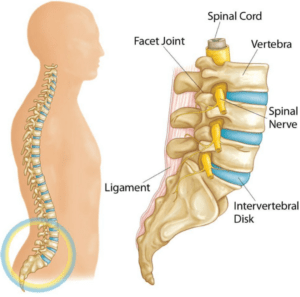
What Does The Research Show?
Large reviews have found that spinal manipulation provides meaningful improvements in pain and disability for many people with chronic low back pain. Some studies have demonstrated outcomes comparable to or better than exercise-based physiotherapy programs.
Research comparing early chiropractic care and physical therapy found that chiropractic care was associated with lower rates of long-term opioid use, while physical therapy did not demonstrate the same effect.
However, it is important to note that the overall evidence suggests both professions can be effective when evidence-based care is provided.
This research shows the comparison between physiotherapy and chiropractic treatment results.
https://www.thespinejournalonline.com/article/S1529-9430(18)30016-0/fulltext?utm_source=chatgpt.com
Key Takeaway
The best outcomes often occur when hands-on treatment and exercise rehabilitation are combined. Chiropractic care offers an advantage for patients whose pain is strongly influenced by joint restriction and movement dysfunction. In our clinic we also include exercises and lifestyle advice that you would normally get from a physiotherapist.
Chiropractic Care vs Cortisone Injections
Cortisone injections are frequently recommended for:
- Disc-related inflammation
- Sciatica
- Facet joint irritation
- Nerve root irritation
The goal is to reduce inflammation around irritated tissues.
When Cortisone Is Appropriate
Cortisone injections may be helpful when:
- Severe nerve pain is limiting function
- Significant inflammation is present
- Conservative care has not produced sufficient improvement
- Surgery is being delayed or avoided
In these situations, injections may provide temporary pain reduction that allows rehabilitation to progress.
The Limitations of Cortisone Injections
Many patients are surprised to learn that cortisone is not a long-term solution.
The effects often wear off over weeks to months.
Potential risks include:
- Tissue degeneration
- Tendon weakening
- Cartilage damage
- Increased blood sugar
- Reduced immune response
Repeated steroid exposure has also been linked to reductions in bone density and increased osteoporosis risk, particularly when injections are performed frequently over time.

Because of these risks, most specialists limit how often cortisone injections can be administered.
A commonly used guideline is no more than three to four injections into the same region per year, although recommendations vary depending on the patient and body region being treated.
Important Point
Cortisone can reduce inflammation.
It does not:
- Correct poor movement patterns
- Restore spinal mechanics
- Improve muscular control
- Increase resilience of the spine
This is why many patients experience a return of symptoms once the injection wears off.
When Is Surgery Necessary?
Despite popular belief, surgery is required in only a minority of back pain cases.
Surgery may be appropriate when there is:
Progressive Neurological Loss
Examples include:
- Increasing leg weakness
- Foot drop
- Loss of reflexes
Cauda Equina Syndrome
Symptoms may include:
- Loss of bladder control
- Loss of bowel control
- Saddle numbness
This is a medical emergency.
Severe Structural Compression
Examples include:
- Large disc herniations
- Severe spinal stenosis
- Instability requiring surgical stabilization
Even when imaging shows disc bulges or degeneration, surgery is not automatically required.
Many imaging findings are present in people with no pain whatsoever.
Why Movement Matters More Than Imaging
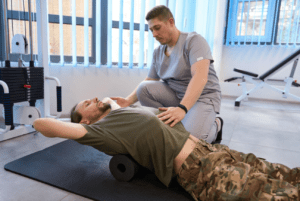
One of the biggest mistakes people make is assuming that MRI findings are the sole cause of their pain.
Research repeatedly shows that:
- Disc bulges are common in people without pain
- Degeneration is often a normal age-related change
- Imaging findings do not always predict symptoms
This is why a comprehensive assessment of movement, function, neurological control, and lifestyle factors is often more important than imaging alone.
A Modern Approach to Back Pain Care
The most effective conservative management often includes:
Chiropractic Care
To improve:
- Joint mobility
- Spinal movement
- Nervous system function
Rehabilitation Exercises
To improve:
- Stability
- Endurance
- Strength
Lifestyle Modification
Including:
- Sleep
- Stress management
- Physical activity
- Workplace ergonomics
Education
Helping patients understand:
- Why pain occurs
- How to stay active safely
- How to prevent recurrence
These are the components we do best at Platinum Chiropractic Erina.
The Bottom Line
For most people with low back pain, conservative care should be the first step.
Current clinical guidelines recommend non-drug approaches before medication, injections, or surgery. Chiropractic care has been shown to be an effective conservative treatment option and is associated with lower rates of opioid use, reduced disability, and improved function in many patients.
Medication may provide temporary relief but carries risks and does not address the underlying causes of mechanical back pain.
Cortisone injections can be valuable in selected cases, particularly when inflammation or nerve irritation is severe, but they should generally be viewed as a tool to facilitate recovery rather than a permanent solution.
Surgery remains an important option for a small percentage of patients with significant structural or neurological problems.
For the majority of people, however, the best outcomes come from addressing the factors that contributed to the problem in the first place: movement, function, strength, lifestyle, and nervous system health.

About The Author - Matthew Hodgson
Matthew Hodgson's passion is neurology and has a reputation for helping people that others aren't able to help. Including complex low back pain, headaches and spinal disc problems. He now practices in the Platinum Building at Platinum Chiropractic Erina.
Most Popular Posts
-

29 August 2020
10 researched benefits of Chiropractic care by Matthew Hodgson BSc MSc Chiropractor Erina -
9 June 2021
Interview with Dr Marc Coghlan Neurosurgeon. -
3 July 2020
Find out what is causing your headaches and how to fix them fast -
13 January 2021
Proprioception, confident children and primitive reflexes -
6 September 2020
Before you see someone about back pain you must read this. (How to diagnose your own problem and start feeling better today).







Comments