


Is My Back Pain a Disc Bulge? Understanding Disc Injuries and Sciatica
Many people experiencing lower back pain wonder whether they might have a disc bulge or slipped disc.
This concern is especially common when pain spreads into the leg, causes numbness, or appears suddenly after bending or lifting.
Wondering if your back pain is a disc bulge? Learn the common symptoms of disc bulge back pain and when to seek professional advice.
For people searching for answers about back pain on the Central Coast, understanding how spinal discs work and what symptoms may indicate a disc problem can help reduce uncertainty and guide the next steps.
What Is a Disc Bulge?
Between each vertebra in the spine sits a structure called an intervertebral disc.
These discs act as cushions that:
absorb shock
allow movement
distribute forces through the spine
Each disc has two main parts:
Outer ring
A tough fibrous structure called the annulus fibrosus
Inner centre
A gel-like material called the nucleus pulposus.
When stress builds in the spine, the outer layer of the disc can weaken and the inner material may push outward. This is commonly referred to as a disc bulge.
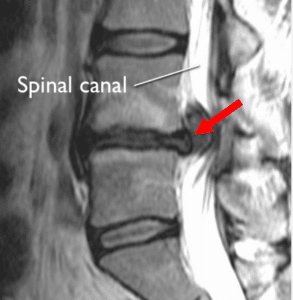
Lumbar disc bulge diagram
Do Disc Bulges Always Cause Pain?
Surprisingly, many people with disc bulges have no symptoms at all.
Research published in the journal Spine found that disc bulges and degeneration are extremely common in people without back pain.
This means a disc bulge seen on an MRI does not always explain someone’s symptoms.
Pain often occurs when the disc bulge irritates nearby nerves or creates inflammation in surrounding tissues.
Common Symptoms of a Disc Bulge
Symptoms vary depending on the severity and location of the problem.
Common signs include:
lower back pain
pain travelling into the buttock or leg
tingling or numbness in the leg or foot
muscle weakness
difficulty standing upright
Pain travelling down the leg is often referred to as sciatica.
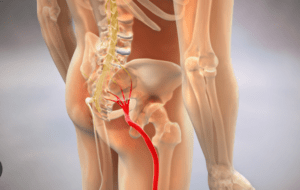
Sciatic nerve
What Causes Disc Bulges?
Disc injuries rarely occur from a single event.
They usually develop gradually due to repeated stress on the spine.
Common contributing factors include:
prolonged sitting
poor lifting technique
reduced spinal mobility
weak stabilising muscles
previous injuries
long periods of physical stress
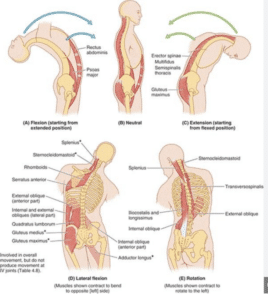
Normal Lumbar spine movement
Many people notice their disc symptoms appear after a seemingly small movement, such as bending to pick something up.
This often happens because the spine has been under accumulated stress for some time.
Why Imaging Doesn’t Always Tell the Full Story
Many patients are surprised when their MRI report shows:
disc bulges
degeneration
arthritis
However, studies published in Spine show these findings are extremely common even in people who have no pain at all.
pmc.ncbi.nlm.nih.gov/articles/PMC6020029
When To Seek Professional Advice
You should seek professional assessment if symptoms include:
pain spreading into the leg
numbness or tingling
muscle weakness
persistent or worsening pain
difficulty walking or standing
A thorough examination can help determine whether the symptoms may involve disc irritation, nerve compression, or another spinal condition.
Disc Bulge and Back Pain Treatment on the Central Coast
If you are experiencing symptoms that may be related to a disc bulge, a proper assessment of the spine and nervous system can help identify contributing factors.
At Platinum Chiropractic Erina, care focuses on identifying mechanical and neurological stresses affecting spinal function.
The goal is to improve mobility, reduce irritation of spinal structures, and support the body’s natural recovery processes.
Frequently Asked Questions About Disc Bulges
Can a disc bulge heal naturally?
Many disc bulges improve over time as inflammation settles and the body adapts.
How long does a disc bulge take to recover?
Recovery varies depending on the severity of the irritation and individual factors such as movement habits and spinal function.
Is surgery always required for a disc bulge?
Most disc bulges do not require surgery and can improve with conservative care.
Summary
Disc bulges are a common finding in the spine and do not always cause pain. However, when they irritate nearby nerves they can produce symptoms such as lower back pain, sciatica, or leg numbness.
Understanding the underlying factors affecting spinal stress and function can help guide effective treatment and recovery.
If you are experiencing symptoms related to back pain on the Central Coast, professional assessment can help determine the most appropriate approach for your situation.

About The Author - Matthew Hodgson
Matthew Hodgson's passion is neurology and has a reputation for helping people that others aren't able to help. Including complex low back pain, headaches and spinal disc problems. He now practices in the Platinum Building at Platinum Chiropractic Erina.
Most Popular Posts
-

29 August 2020
10 researched benefits of Chiropractic care by Matthew Hodgson BSc MSc Chiropractor Erina -
9 June 2021
Interview with Dr Marc Coghlan Neurosurgeon. -
3 July 2020
Find out what is causing your headaches and how to fix them fast -
13 January 2021
Proprioception, confident children and primitive reflexes -
6 September 2020
Before you see someone about back pain you must read this. (How to diagnose your own problem and start feeling better today).







Comments